Andrew Martin and Daniel Russell’s relationship
The HumansAndrew Martin and Daniel Russell’s relationship is marked by a striking contradiction: they have worked together as academic colleagues, yet Andrew’s wife describes him as hating Daniel, while Andrew entrusts him with the first look at a proof that could change mathematics. Their connection moves from professional collaboration and private disclosure to impersonation and violence when Andrew Martin (the alien narrator) takes Andrew’s place.
Academic Colleagues and Rivals
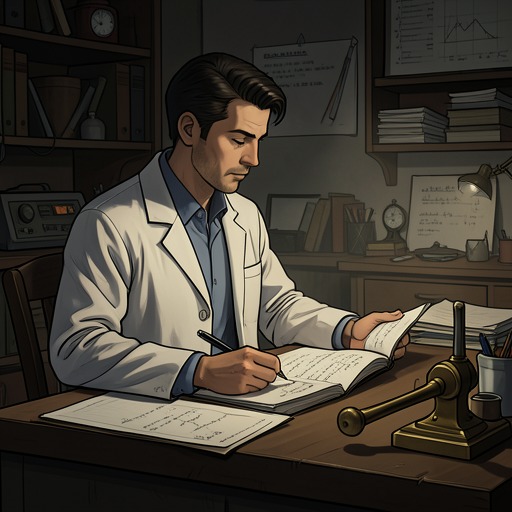
Daniel Russell is the Lucasian Professor of Mathematics at Cambridge University, sixty-three years old, and the author of fourteen books, most of them international bestsellers. His career has taken him to universities with formidable reputations, and he has received numerous awards and titles. He and Andrew have worked together on several academic papers. The alien narrator’s brief research suggests they were colleagues more than friends, a restrained description that sits uneasily beside the intensity of Andrew’s reported hostility.
When Andrew Martin (the alien narrator) asks where Daniel lives, Andrew’s wife says that the couple have previously been to dinner at Daniel’s house in Babraham. She describes it as an enormous place, comparing the visit to one to Nero’s palace. The narrator uses his supposed hazy memory and pills as an explanation for asking; he is trying to learn details of a life he has inherited. In that exchange, his wife makes the personal rivalry explicit: Andrew cannot stand Daniel, she says, and deep hostility is his default attitude toward other academics, with Ari as the exception. The account is her assessment, not Daniel’s, and the evidence offers no scene between the original Andrew and Daniel that explains how their antagonism began.
The Proof and the Private Confidence
The relationship is not simply one of antagonism. Andrew’s last sent email is addressed to Daniel and carries the subject line “153 years later . . .” with a red exclamation mark. In it, Andrew says he has proved the Riemann hypothesis, asks Daniel to examine the attachment, and stresses that the news is for Daniel’s eyes only until it goes public. He asks what Daniel thinks and wonders whether humanity will be changed by the discovery. The email places Daniel in the role of first trusted reader of a result Andrew presents as momentous.
That confidence sharpens the contrast with the reported hatred. Andrew has collaborated with Daniel, knows him socially well enough to visit his home for dinner, and chooses him as the first person to review the proof. Yet the surviving material does not resolve whether Andrew’s hostility coexists with professional trust, or whether the email reflects a relationship whose terms have shifted. The narrator never gets to test the proof with Daniel: he deletes the message and its attachment, then creates a virus intended to prevent anything on the computer from being accessed intact. Andrew’s intended confidential exchange is thus interrupted before Daniel’s response can be known.
Impersonation and Confrontation
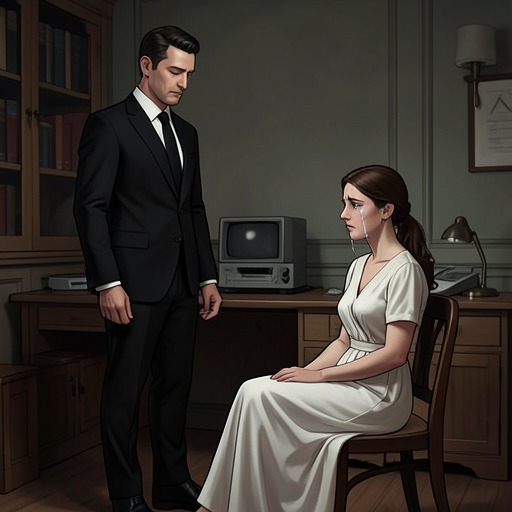
Later, Daniel calls and asks whether he is speaking to Andrew. The alien narrator, still using Andrew’s identity, does not recognize Daniel’s voice or know where his study is. At Daniel’s house, the narrator follows the sound of the same dry voice to a room on the first-floor landing. Daniel greets him with a sardonic question about whether he is the saviour of mankind, linking Andrew’s claim to have proved the Riemann hypothesis with the scale of its possible consequences. His later remark about being pleased that Andrew is wearing clothes also alludes to the earlier public “Naked Professor” incident.
The encounter ends the possibility of an ordinary meeting between the two men. Daniel slaps the narrator’s back; at that contact, the narrator makes a reading. For less than a second, the face before Daniel is no longer Andrew’s. The narrator returns to Andrew’s appearance, but Daniel has seen the change and recoils against his desk. The alien paralyzes Daniel’s jaw and, needing another contact, puts a hand on his shoulder; pain follows, and Daniel’s face turns violet. This is not a confrontation between the original Andrew and his academic rival: it is the alien using Andrew’s identity to approach Daniel, then silencing and hurting him when the disguise is exposed. The relationship’s unresolved mix of collaboration, resentment, and confidence is left suspended beneath that violent encounter.